
Bacteria Can Suppress the Development of Skin Cancer
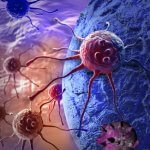
A new discovery will help fight cancer in a gentle way.
Earlier, scientists established that there are antibacterial peptides produced by certain bacteria found on human skin. These peptides can protect humans from some pathogenic microorganisms. A new discovery by researchers from the University of California showed that strains of epidermal Staphylococcus inhibit the development of certain types of cancer. The research offers hope that a fundamentally new method for combating skin cancer will soon be found, one that does not harm healthy cells in the body.
“Beneficial” Staphylococcus
 The research team was led by Professor Richard Gallo, head of the dermatology department at the University of California. During the study, a molecular analysis of the metabolic products of microorganisms found on human skin was conducted. It turned out that during metabolism, strains of epidermal Staphylococcus release a certain chemical substance capable of stopping the development of cancer cells.
Scientists isolated the chemical substance 6-N-hydroxyaminopurine (6-HAP), a metabolic product of Staphylococcus, which has the ability to suppress the DNA synthesis of cancer cells. Experiments were conducted on mice: they were exposed to carcinogenic ultraviolet radiation after being implanted with skin melanoma cells. The first group of rodents was injected with a strain of Staphylococcus that produces 6-HAP, while the second group had a modified strain that cannot produce the substance 6-N-hydroxyaminopurine. The first group of mice received injections of 6-HAP every forty-eight hours, while the second group did not receive any. The results of the experiment showed that in the first group of rodents, the tumor cells decreased in size by two times compared to the group that did not receive injections.
Send your records — an Ichilov physician will reply within 1–2 days, free of charge.
Promising Research
According to Professor Gallo, microorganisms that produce the anti-cancer substance live on the skin of every person: “6-HAP selectively affects only cancer cells, which offers unique prospects for developing a new type of treatment that does not harm healthy human cells.”
Of course, the professor emphasized that numerous studies are required to understand how the strain “works” and what the mechanism of 6-HAP production is, as well as how its insufficient quantity affects the development of melanoma. Only after that can we talk about the implementation of methods for the prevention and treatment of skin cancer.
However, it can already be said that pathogenic microorganisms like Staphylococcus, it turns out, perform their important function in maintaining the balance of healthy and diseased cells. Staphylococci play a significant role in protection against malignant neoplasms and can prevent the emergence of cancer cells or suppress the growth of those already present.