
Kidney Chip Opens New Opportunities for Drug Development and Personalized Medicine
The development of advanced drug screening tools is crucial for the advancement of personalized medicine and the creation of more effective treatment methods. One of the organs that attracts special attention in this area is the kidney.
Thus, the proximal tubules of the kidneys play an important role in the reabsorption of critical substances from the bloodstream before urine formation. However, traditional in vitro models have struggled to accurately reproduce this process, often failing to express key transport proteins such as organic anion transporters — OAT1/3 — and organic cation transporter 2 — OCT2.
OPTECs-on-Chip: A Breakthrough in Modeling Proximal Tubules
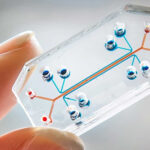
A group of researchers from Kyoto University has developed a proximal tubule-on-a-chip — OPTECs-on-Chip — based on a kidney organoid derived from human iPS cells, which more accurately mimics in vivo kidney physiology than ever before. This model demonstrates enhanced expression and polarity of key renal transporters, making it a powerful tool for assessing drug transport and nephrotoxicity. Our OPTECs-on-Chip shows significant improvements in the expression and functionality of OAT1/3 and OCT2 transporters compared to previous models using immortalized cells,” says Cheng Ma from the Graduate School of Engineering at Kyoto University.
This microphysiological system — MPS — utilizes two widely used differentiation protocols to obtain kidney organoids, integrating them into a microfluidic system to form a proximal tubule model. It successfully maintains transporter expression, reproducing drug excretion mechanisms in the proximal tubules of the kidneys in vitro, mimicking the function of human epithelial tissue.
“By listening to the needs of pharmaceutical companies for a high-functioning kidney chip that they require, we can best integrate MPS technology into drug development,” explains group leader Ryuji Yokokawa from the Department of Microengineering at Kyoto University.
Send your records — an Ichilov physician will reply within 1–2 days, free of charge.
New Horizons in Pharmacology
“We have demonstrated that our OPTECs-on-Chip not only assesses nephrotoxicity but also quantitatively determines transcellular substrates transported exclusively by OAT1, OAT3, and OCT2. This highlights the advantages of using iPS cell-derived cells and the microfluidic system to reproduce in vivo cellular transport mechanisms,” add co-authors Minoru Takasato from the RIKEN Center for Biosystems Dynamics Research and Toshikazu Araoka from the Center for iPS Cell Research and Application at Kyoto University.
The Yokokawa team plans to apply their MPS model as a screening tool for drug development by assessing the transport and nephrotoxicity of various membrane proteins.
“Our model has significant potential for drug screening and personalized medicine,” notes Yokokawa. “By including patient-derived stem cells, we can develop personalized assessments for renal transport and disease modeling.”