
Bacterial Toxin Against Colorectal Cancer
Colorectal cancer ranks third in prevalence among all oncological diseases and second in mortality worldwide. Traditional treatment methods, while effective in many cases, are accompanied by severe side effects that significantly reduce the quality of life for patients. Against the backdrop of rising colorectal cancer incidence, the search for alternative therapeutic approaches has become a critically important task.
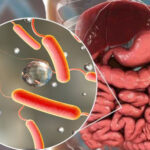
Researchers from Umeå University in Sweden have discovered an unexpected solution from what seems to be an incredible source – a toxin produced by cholera bacteria. Their work demonstrates how the substance MakA, a cytotoxin from Vibrio cholerae, could serve as the basis for a fundamentally new type of cancer therapy.
Double Strike on the Tumor
The mechanism of action of MakA turned out to be significantly more complex than simply destroying cancer cells. Professor Sun Nyunt Wai, one of the leading authors of the study, explains the uniqueness of the discovery: “This substance not only directly kills cancer cells but also alters the tumor microenvironment, helping the immune system fight the tumor without damaging healthy tissues.”
In experiments on mouse models of colorectal cancer, systemic administration of purified MakA led to a significant reduction in tumor growth. Moreover, the substance demonstrated remarkable selectivity, accumulating specifically in tumor tissue while bypassing healthy cells.
In tumors, MakA triggered a cascade of anti-cancer effects. The toxin enhanced the death of malignant cells and suppressed their ability to divide. At the same time, it radically restructured the cellular microenvironment of the neoplasm, increasing the presence of innate immune cells, primarily macrophages and neutrophils. These immune cells further contributed to the suppression of tumor growth, creating a hostile environment for cancer cells.
Send your records — an Ichilov physician will reply within 1–2 days, free of charge.
Safety Without Compromises
One of the key findings of the study is the absence of toxicity to the organism. Even after multiple administrations of the drug, the researchers did not observe any negative consequences for the test animals. Body weight, overall health, and vital organ functions remained normal. The treatment did not cause harmful inflammation, which often occurs with traditional therapies.
This data indicates that the action of MakA is localized and directed exclusively at tumor tissue, without affecting healthy areas of the body.
Further analysis of molecular mechanisms showed that MakA stimulates the production of immune mediators directly in the tumor. These signaling molecules activate cell death programs in cancer cells while simultaneously initiating regulatory mechanisms that protect surrounding healthy tissues from damage.
Path to Clinical Application
Saskia Ertmann, one of the leading authors of the work, cautiously assesses the prospects of the discovery: “Although further research is needed, the results clearly indicate an interesting path for developing a new type of cancer treatment that utilizes substances produced by bacteria, both for destroying cancer cells and for strengthening the body’s own defenses.”
The research group emphasizes the need for further work. The anti-cancer potential of MakA must be studied in other experimental models, including various types of tumors. A thorough assessment of the safety and efficacy of the substance will be required for possible clinical application in humans.
Nevertheless, the discovery by Swedish scientists opens an exciting prospect for the use of bacterial toxins in oncology. The combination of direct cytotoxic action with the activation of anti-tumor immunity in the absence of systemic toxicity makes MakA a promising candidate for the development of innovative anti-cancer drugs.