
A Diagnostic Test Developed in Israel to Stop the Growth of Superbugs
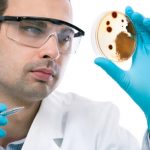
The Israeli startup Nanosynex is working on a new approach that will help doctors prescribe antibiotics more accurately based on the type of pathogen, and will reduce the growth and spread of antibiotic-resistant deadly bacteria.
The rise in the number of so-called superbugs—dangerous microorganisms resistant to antibiotics and other medications—is approaching an epidemiological threshold. Currently, nearly 700,000 people worldwide die each year not from diseases for which they seek medical attention or hospitalization, but from infections caused by antibiotic-resistant bacteria.

In most cases, superbugs develop due to incorrect antibiotic prescriptions—either the wrong ones or in incorrect dosages. Due to improper treatment, the bacteria "learn" and mutate, passing antibiotic-resistant genes to other microorganisms. "The body becomes a sort of incubator for drug-resistant bacteria," explains Diana Abensur Bessin, CEO of Nanosynex, the Israeli startup developing a new diagnostic approach that will help doctors avoid incorrect antibiotic prescriptions.
"If the correct treatment is prescribed to the patient in the correct dosage, no resistance will develop, the patient will recover faster, and other patients will not become infected with drug-resistant bacteria," she says.
Results in Four Hours
As a solution to the problem, Nanosynex offers an innovative diagnostic test that determines which bacteria in the patient's body are resistant to which type of antibiotic—in just four hours. As a result, doctors can more quickly select the appropriate medication that will work in a specific case.

The developers hope that this will lead to certain changes in the behavior of medical professionals, who are accustomed to immediately prescribing broad-spectrum antibiotics to patients instead of taking blood and urine samples for analysis and waiting for the results. It’s not that doctors are in collusion with dangerous bacteria; it’s just that their patients are suffering, and they want to help them as quickly as possible. "But when we are dealing with drug-resistant bacteria, every minute counts," says Abensur Bessin. "If you don’t get your test results within a few days, it may be too late to stop the development of resistance."
The problem of indiscriminate antibiotic prescribing is particularly acute in primary healthcare, which most often deals with infections caused by viruses rather than bacteria. About 90% of all antibiotic prescriptions in the U.S. are made by general practitioners, that is, regular therapists.
Nanosynex is working on creating a kit that will be sold to laboratories; it will contain disposable cards, a fluorescent reading device, and software for conducting the analysis. According to the developers, the technology is based on a microfluidic chip that requires much fewer bacteria than other diagnostic tools. The biological material is mixed with a fluorescent dye, after which the intensity of the fluorescent signal is tracked—it is proportional to the growth of bacteria.
Send your records — an Ichilov physician will reply within 1–2 days, free of charge.
Perfect Match

The idea for the unique technology came to Abensur Bessin and her colleague, Brazilian-born Michelle Heyman, while both were studying in an MBA program at the Technion – Israel Institute of Technology. They approached the university's technology transfer center and asked researchers if they had any sufficiently developed technologies that could be turned into a startup. "We met with five different professors," says Abensur Bessin, "We needed a technology that could be brought to market in a short time—five years or less."
That’s how they met Professor Shulamit Levenberg, dean of the Faculty of Biomedical Engineering at the Technion. By that time, the professor and her team had already been working for several years on creating a microfluidic chip that would later become the basis of the Nanosynex diagnostic kit.
Born in Paris, Abensur Bessin had long been searching for a medical technology around which to build a company. Her father owned a firm in France that distributed diagnostic tools throughout Europe. Given the existing distribution channels, Levenberg's invention was a perfect fit for her. "We knew that this development had enormous potential," says Abensur Bessin. "No one doubted the need to create such technology."
Nanosynex was registered in 2017 and was able to attract one million dollars in investments in addition to 500,000 dollars provided by the Israeli Innovation Authority. The company, which currently has five employees, is now managed from the internal accelerator of the Technion but plans to move to its own office soon.
Last year, Nanosynex was among the top ten companies accepted into the IBM healthcare startup accelerator based in Tel Aviv. It receives blood for testing its technology from the Rambam Medical Center in Haifa and Shaare Zedek in Jerusalem. The head of the microbiology department at Rambam is a member of the company's scientific advisory board.
According to the developers, when their technology's results were compared with those of existing diagnostic devices, it turned out that they were the same, only done twice as fast. Containing the growth and spread of superbugs is just the beginning of what Abensur Bessin hopes will become "a long-term business that will grow on an international scale."
In the future, if your doctor tells you to wait a few hours before prescribing an antibiotic, don’t worry: it will be better for your health. And for the well-being of the entire planet.