
Israeli Technology Simplifies Radiologists' Work
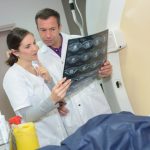
It took only two years for the Israeli company Aidoc, which develops artificial intelligence (AI) solutions for radiologists, to radically change the field of medical imaging with unique deep learning algorithms that detect critical abnormalities in the functioning of the human body.
Since its launch in early 2016, Aidoc's technology has analyzed tons of medical images – about 280,000 images – and numbered them in real-time, saving 3,274,409 minutes of human labor. Company representatives say that their development helps optimize workflow in radiology, improve diagnostics, and consequently save more lives.
And this is just the beginning.
“In developing new technology, we decided to focus primarily on acute pathologies – an area where the quality of medical care and its timeliness are critically important,” says Aidoc's CEO and co-founder Elad Valah. “Radiologists have to respond quickly to a huge number of acute conditions detected while reading images. To speed up, someone (or something) must take on a significant part of the radiologist's workflow. Our technology can scan the entire worklist and highlight urgent cases that require immediate assistance, increasing the specialist's response speed.”
The Tel Aviv startup Aidoc was founded by 30-year-olds Elad Valah, Michael Braginsky, who serves as chief engineer, and Guy Reiner, who works as vice president. All three are computer and mathematical geniuses, veterans of the elite “Talpiot” unit of the Israel Defense Forces, which trains high-level specialists for military developments and has been creating artificial intelligence technologies for almost ten years.
Together with Dr. Gal Yaniv, their “colleague” from “Talpiot,” who heads the company's medical division, the founders of Aidoc precisely identified the area of healthcare most in need of a solution to the problem of excessive data accumulation. The technology they developed analyzes medical images immediately after the patient has undergone examination and informs the radiologist of suspicious findings on the images. Thus, the system helps the specialist identify urgent and life-threatening cases to address them first.
Being one of the few artificial intelligence platforms in healthcare, Aidoc's products quickly gained recognition. Their technology for brain diagnostics, which helps radiologists detect cases of acute intracerebral hemorrhage in patients after a CT scan of the head, was approved by the U.S. Food and Drug Administration (FDA) in August. Last month, the young startup was included in the “50 Genius Companies – 2018” list compiled by the prestigious TIME magazine.
“This is a real recognition,” says Aidoc's vice president of marketing Ariella Shoham. “We knew that radical changes were needed in the field of radiology. Being somewhat of a ‘behind-the-scenes’ aspect of medical care, it has finally received the attention it deserves. The recognition of our development has convinced us that we are moving in the right direction.”
“It is gratifying to see that radiology is returning to the forefront of medical technology,” comments Valah on his company's inclusion in the prestigious TIME list. “We are more motivated than ever to continue working, creating advanced technologies for radiology, developing innovative tools to solve the problems of medical imaging and data overload, which are among the most challenging tasks of our time.”
Friend or Foe
 Radiology has always been associated with specific technical challenges. According to the European Society of Radiology, the average hospital accumulates about 50 petabytes of data annually, including clinical comments, laboratory test results, medical images, etc. Less than 3% of this data is utilized. Artificial intelligence, when used correctly, can bring order to existing information arrays, improve the efficiency of healthcare institutions and diagnostic accuracy, personalize treatment, provide remote and preventive care, and, perhaps most importantly, enhance the quality of patient care.
“AI technologies can replace time-consuming routine tasks in radiology,” says Shoham. “Our goal is to help radiologists increase the efficiency and accuracy of their work. The machine learning algorithms developed by our company can perform many functions of radiologists.”
And while there are concerns among radiologists that they may be replaced by machines, the healthcare sector has a digital future. In fact, the use of artificial intelligence in healthcare is growing and is expected to fundamentally change the efficiency, quality, accessibility, and cost of services in this sector. The artificial intelligence market in healthcare is rapidly growing and is projected to reach an impressive $6.6 billion by 2021.
“It's not about whether artificial intelligence is a friend or foe, or whether it will replace radiologists. It doesn't really pertain to machines or people at all. Machines will not replace radiologists. If you look at trends in healthcare… radiologists who use AI technologies will be more efficient and will perform better than their colleagues who do not use AI,” assures Ariella Shoham.
The International Day of Radiology, celebrated on November 8, coincides with the anniversary of the discovery of X-rays by German physicist Wilhelm Röntgen. This discovery in 1895 essentially laid the foundation for radiology. Today, in 75% of cases, patient medical care includes radiological examination, and the share of medical imaging is growing at a tremendous pace. Artificial intelligence is an important tool that can help radiologists increase their efficiency and speed up patient care.
“Observing the software's operation has highlighted key aspects that AI must cover to streamline the radiologist's work day after day. This includes full integration into the workflow and widespread application,” says Dr. Barry Pressman, head of the medical imaging department at Cedars-Sinai Medical Center in Los Angeles and former president of the American College of Radiology, commenting on the FDA-approved Aidoc technology designed for brain imaging. “Based on the facts presented, it is clear that in the near future, the field of radiology will be unthinkable without the use of software like that produced by Aidoc.”
Send your records — an Ichilov physician will reply within 1–2 days, free of charge.
Military Technologies at the Service of Medicine
 According to Forbes, more than 900 young companies in Israel today are using or developing AI-based technologies and such areas as machine learning, deep learning, automatic image analysis, natural language processing, robotics, and speech recognition as a core component of their solutions for commerce, security, marketing, banking, and healthcare.
In particular, in the medical sector, companies such as Zebra Medical, which uses highly efficient algorithms that automatically detect pathological conditions, the American-Israeli firm Viz.ai, which applies artificial intelligence to analyze CT images and helps doctors recognize strokes, and Clew Medical, which uses an analytical platform to detect life-threatening conditions at early stages, are active.
“The emergence of hundreds of new markets and use cases recently opened up by advancements in artificial intelligence and intelligent data processing has made AI truly in demand,” says Shali Galili, co-founder of the UpWest Labs seed investment fund. “Most Israeli entrepreneurs have military service backgrounds, which means they generally have more real-world experience with AI technologies, image processing, computer modeling, etc., than entrepreneurs from other countries.”
Indeed, for the newcomer Aidoc, the military experience of its founders helped convince more than fifty medical centers worldwide to install its software. They are among the youngest in the list of Israeli entrepreneurs using revolutionary military technologies for good purposes.
“Many healthcare institutions that currently use Aidoc's software appreciate Israeli technology. They value what has resulted from the application of military technologies. This is what has ensured our demand,” says Ariella Shoham, explaining how the young company managed to persuade the heads of radiology departments at several leading American medical centers to use their deep learning algorithms to optimize workflow.
Aidoc's software is used for full-size imaging, including outside the United States, and has been profitable since December of last year.
“Our goal is to support radiologists with AI tools that truly matter and provide benefits in their daily practice, and we are pleased to finally release a product capable of helping save human lives,” Valah writes in his blog. “We became the first company to receive government approval to provide radiologists with AI technologies for sorting patients.”
According to him, this is a groundbreaking achievement as it symbolizes the beginning of a new era in the use of artificial intelligence by radiologists.