
A Powerful Weapon Against Antibiotic-Resistant Staphylococcus Found
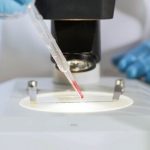
Serious infections caused by the bacteria Staphylococcus aureus (S. aureus) are often difficult to treat due to the pathogens being resistant to antimicrobial drugs. However, researchers from the University of North Carolina School of Medicine have found a way to improve the situation: they discovered how to make these dangerous bacteria more susceptible to common antibiotics.
⚡ You need an urgent consultation if:
- ⚠️ The infection returns after a course of antibiotics
- ⚠️ Treatment with 2-3 different drugs is ineffective
- ⚠️ You are undergoing chemotherapy or immunosuppressive treatment
- ⚠️ Your child has an oncological disease
- ⚠️ Prolonged stay in intensive care
- ⚠️ After a bone marrow or organ transplant
- ⚠️ Chronic wound infections that do not heal for months
Delaying is dangerous. Resistant staphylococcus can lead to sepsis.
Send your records — an Ichilov physician will reply within 1–2 days, free of charge.
⚡ Is it necessary to go to Israel or can I have an online consultation?
Both options are possible:
✅ An online consultation is suitable if:
- ➤ You need a second opinion on your current treatment
- ➤ You want to receive a therapy protocol for use at home
- ➤ You are planning a visit but want to consult beforehand
✅ A visit to Israel is necessary if:
- ➤ Specialized diagnostics are needed (not available in your country)
- ➤ Treatment with drugs not registered in the CIS is required
- ➤ Complicated infection requires constant monitoring
In an article published in the scientific journal Cell Chemical Biology, American researchers reported their recent discovery. They found that molecules from the polysaccharide family – rhamnolipids – can enhance the action of aminoglycoside antibiotics, such as tobramycin, against S. aureus, including resilient strains that are otherwise difficult to overcome. According to the researchers, rhamnolipids alter the membranes of Staphylococcus aureus cells, making them more flexible and pliable, which facilitates the penetration of the antibiotic.
“There is a huge need for new – more effective – methods to combat bacteria that tolerate treatment with standard antibiotics or develop resistance to them,” says the lead author of the study, Brian Conlon, an assistant professor in the Department of Microbiology and Immunology at the University of North Carolina School of Medicine. “In the search for such methods, we found that altering the permeability of bacterial cell membranes for better absorption of aminoglycosides is an extremely effective strategy in combating Staphylococcus aureus.”
⚡ How this is applied at Ichilov Clinic:
Our infectious disease specialists and microbiologists keep up with all the latest research and apply advanced treatment protocols:
- ✅ Combination therapy with antibiotic enhancers
- ✅ Use of drugs that alter bacterial membrane permeability
- ✅ Personalized selection of combinations based on laboratory tests
- ✅ Access to clinical trials of new treatment methods
According to the American Centers for Disease Control and Prevention, in 2017, S. aureus was responsible for nearly 120,000 cases of serious bloodstream infections in the U.S., of which 20,000 were fatal.
Standard methods of combating most strains of Staphylococcus aureus are ineffective either because the bacteria have genetically acquired resistance to certain antibiotics or because they grow in the body in a way that makes them less vulnerable. For example, S. aureus can adapt its metabolism to survive in low-oxygen areas – in tissues with purulent inflammation or mucus-filled lungs in people with cystic fibrosis. In such environments, the bacterial membrane becomes relatively impermeable to aminoglycoside antibiotics, such as tobramycin.
Brian Conlon and his colleagues, including the first author of the study, Lauren Radlinski, discovered two years ago that rhamnolipids significantly enhance the action of tobramycin against standard test strains of Staphylococcus aureus. These polysaccharides are small molecules produced by the bacteria Pseudomonas aeruginosa, known as the blue pus bacillus, and serve as their natural weapon in competitive battles with other microorganisms in the wild. In high doses, they perforate the cell membranes of rival bacteria.
At that time, the researchers found that rhamnolipids significantly increase the absorption of tobramycin molecules, even at low doses where they have no antibacterial action themselves. In the new study, they tested a combination of rhamnolipid and tobramycin against populations of S. aureus that are typically difficult to manage in standard clinical practice. The researchers found that the polysaccharides enhance the action of tobramycin against:
- bacteria S. aureus growing in low-oxygen areas;
- methicillin-resistant S. aureus, which represent a family of dangerous variants of Staphylococcus aureus with genetically acquired resistance to drugs;
- tobramycin-resistant strains of S. aureus isolated from patients with cystic fibrosis;
- resistant forms of S. aureus that typically have reduced susceptibility to antibiotics because they grow very slowly.
“Doses of tobramycin that usually have little or no effect on these populations of S. aureus quickly kill them in combination with rhamnolipids,” says Dr. Radlinski.
 Researchers found that even at low doses, rhamnolipids can alter the membrane of Staphylococcus aureus, making it much more permeable to aminoglycoside antibiotics. Each of the drugs in this family that they tested, including tobramycin, gentamicin, amikacin, neomycin, and kanamycin, demonstrated increased effectiveness. Moreover, experiments showed that this strategy, which involves enhancing their action, works not only with S. aureus but also with some other types of bacteria, including Clostridium difficile, which is a leading cause of serious, often fatal diarrheal diseases among the elderly and hospitalized patients.
Rhamnolipids come in different types, and now researchers hope to determine if there is an optimal type among them that will be most effective against other bacteria while being minimally or non-toxic to human cells. The team also plans to study other types of molecules that serve as natural weapons of one bacterium against another to find new ways to enhance the effectiveness of existing antibiotics.
⚡ Staphylococcus is not responding to antibiotics?
Get a consultation with an infectious disease specialist within 24 hours.
Bacterial resistance analysis and individual treatment protocol within 3 days.
We operate 24/7. Response within 1 hour.
“There are many types of bacterial interspecies interactions that can potentially affect the action of our antibiotics,” says Dr. Radlinski. “We aim to find them with the sole purpose of enhancing the effectiveness of modern drugs and slowing the growth of antibiotic resistance.”