
In Israel, Foundations for a New Treatment for Pancreatic Cancer Have Been Laid
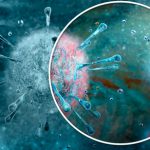
Israeli scientists have made a discovery that could serve as the basis for a new approach to treating pancreatic tumors. They discovered that the tiny molecule PJ 34 effectively deals with cancer cells by prompting them to initiate a self-destruction process. A recent study in which scientists tested the promising compound on mice showed that its use allows for the elimination of up to 90% of pancreatic cancer cells. At the same time, it is safe for healthy cells. A team of researchers from the Sackler School of Medicine at Tel Aviv University, led by Professor Malki Cohen-Armon, conducted an experiment using xenografts (the term for tissue or organs transplanted from one species to another). They implanted human pancreatic cancer cells under the skin of laboratory rodents. The specialists weakened the animals' immune systems so that their bodies would not reject the transplanted cells.
According to the authors of the study, this molecule was originally developed for treating patients who had suffered a stroke. However, two years ago, its anti-tumor properties were discovered by chance: it turned out that the compound somehow disrupts the process of chromosomal duplication in cells, leading to their rapid death.
As Professor Cohen-Armon recounted, she once tasked one of her students, who was looking for a topic for her doctoral dissertation, to check how the experimental molecule would interact with breast cancer cells. "Next door, there was a lab whose staff was searching for effective treatment options for aggressive forms of breast cancer," the professor recalls. "My student conducted the experiment and was surprised to find that after contact with the tested protein, most malignant cells died while healthy ones remained untouched. After we published the results of this small study, scientists around the world began testing it on cells from other types of cancer."
Upon making the discovery, Israeli researchers established the mechanism that provokes the self-destruction of human tumor cells during their duplication – the most common method of cell division that ensures the equal transfer of hereditary information from the mother cell to two daughter cells. They used the obtained data to effectively destroy the cells of human pancreatic ductal adenocarcinoma in xenografts.
After a two-week treatment course for the mice using the experimental molecule, the scientists took a 30-day break before evaluating the results. And it exceeded their wildest expectations: the number of cancer cells in the rodents decreased by 80–90%. In one of the test animals, the tumor completely disappeared. At the same time, the authors noted that the mice that experienced the effects of PJ 34 showed no side effects, and their weight and behavior remained unchanged.
It was also important that the molecule disrupted the duplication of only human cancer cells, without affecting healthy ones, the scientists emphasized. This was determined because pancreatic tumors are composed of half normal cells, which the malignant ones use for their growth and development. "This is precisely where the main value of this mechanism lies: it acts on malignant cells but does not affect healthy ones. This allows it to be used for developing new strategies in the fight against oncological diseases," the Tel Aviv researchers stated.
And although PJ 34 can effectively work with different types of cancer cells, the scientists chose to focus specifically on pancreatic cancer, and not without reason. It is one of the most aggressive and deadly types of oncology, for which effective treatment currently does not exist. It ranks among the dozen most common oncological diseases and is the fourth leading cause of cancer death. Pancreatic tumors are considered some of the most severe and difficult to treat, as they often develop resistance to existing therapy methods.
Detecting this dangerous disease at early stages is impossible due to the virtually complete absence of specific symptoms. It can mask itself for a long time as other, more benign gastrointestinal pathologies. As a result, pancreatic cancer is diagnosed at an advanced – metastatic – stage in almost 80% of patients, when the disease has already spread to nearby lymph nodes, liver, gallbladder, kidneys, lungs, and other vital organs.
In such situations, surgical removal of the tumor is usually impossible, and other options for anti-tumor treatment prove ineffective. As a result, less than 3% of patients survive beyond the five-year mark, while the rest die within 6–12 months of diagnosis.
In this light, the discovery by Israeli scientists could serve as the basis for developing new effective methods for treating this aggressive type of cancer in humans. It may also help in the fight against aggressive forms of breast, lung, brain, and ovarian cancers.
Currently, the molecule PJ 34 is undergoing testing as part of preclinical trials, which, according to the rules of the U.S. Food and Drug Administration (FDA), must be conducted before moving on to trials in larger animals (pigs and dogs). If they prove successful, scientists will receive permission to begin clinical trials in humans. However, this will not happen for at least three years.
Additionally, the team is simultaneously working on improving the form of the future drug – during experiments, it was administered to rodents intravenously via a drip, but it is planned that it will be released in tablet form.