
New Discovery Will Help Save People with Lung Cancer
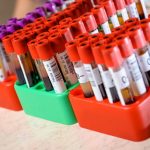
Israeli doctors are constantly improving the quality and reliability of cancer diagnostics.
Every year, around 2 million people worldwide are diagnosed with lung cancer, with 88% of them dying within a year. Scientists have long been working on the problem of early diagnosis of this type of oncological pathology, as there are significantly higher chances of recovery at the very beginning of the disease. However, until recently, there was no method that could accurately detect early-stage lung cancer. Since it does not present clear symptoms, patients often seek medical help only at a late stage, when the cancer has spread throughout the body.
The Israeli company Nucleix LTD recently introduced its new development: a unique blood test that can detect lung cancer even at the earliest stages. The development team, led by the company's director, Dr. Ilan Ganor, included other specialists from Nucleix. A test was created by Dr. Dani Frumkin, Dr. Adam Wasserstrom, and Dr. Ofer Shapir, which detects mutations in human DNA that lead to the formation of neoplasia.
During the research, a study was conducted with a group of 170 volunteers with a confirmed diagnosis of "lung cancer" and with a group of healthy individuals who are at risk – those who have been smoking for a long time. The results of the experiment are quite promising. The analysis detected cancer in 75% of volunteers with oncological diseases, which is currently the highest rate for early diagnosis of lung cancer. Among smokers, 94% of volunteers showed no signs of cancer.
According to Dr. Ilan Ganor, experiments and research will continue, as doctors aim to achieve even greater diagnostic reliability. However, even if the quality of diagnostics remains at the current level, it can already be considered a real breakthrough. There has not been a diagnostic method that provides such high reliability rates for early-stage lung cancer before.
It is planned that Nucleix will launch the test in the medical services market within two years. This test will be used to detect oncological processes in individuals over 50 years old who have a long history of smoking.